Tuesday, December 05, 2017

Closing Congress?

Today's opposition in Congress is currently halting many events in the United States government. The United States was originally not so savage when it came to political parties and their affect on legislation and the President. Today, party politics are the only politics. With a great divide such as this, it is rare that any important legislation ever passed. Today, Republicans and Democrats are divided on the military budget. Both agreed that it should be increased, but Republicans then want the spending to stop; whereas the Democrats want the budgets for other agencies to be increased as well. There is currently Republican infighting about the bill, which may lead to a shutdown on Friday.
The bipolarity of Congress mentioned in Chapter seven of Friends and Foes brought to mind a current issue in Congress: the question of an impending government shutdown. The book mentions that, “one motivated member of Congress can delay vital legislation, slash needed funding, or paralyze executive officials with a barrage of letters, requests, hearings, and reporting requirements.” This week in Washington D.C., Senator Dick Durbin, a democrat, said that unless the “Dreamers” issue was resolved, he planned to oppose the bill that would allow the government to stay open. Yet, another democratic senator said that spending bills should come first, despite the fact that the “Dreamers” issue is “important to all of us,” according to Reuters.

Here lies the importance of Congressional cooperation with the executive power. Will President Trump bend to the will of the Democrats and enable the “Dreamers” to stay in America? Or, will President Trump be willing to allow an entire government shutdown within his first year in office? The President can choose between two campaign promises: he can increase the military budget, or he can allow thousands of undocumented immigrants to stay in the United States.  
Article Referenced: https://www.reuters.com/article/us-usa-congress-shutdown/democrats-flex-muscles-as-congress-confronts-a-government-shutdown-idUSKBN1DZ340

Should the President care?

While doing the reading for this week, based on public opinion and the media, I wondered to myself who actually cares about the public’s opinion? Does our current President care when an election is on the line? At the end or beginning of a term, does it matter if the public likes what you are doing as the leader of the free world? Surveys were taken in the reading about the approval rating of the President by the average Americans. We see on television shows and movies when the President’s approval rating is down. It seems like a devastating blow for an administration. However, if this is so devastating to an administration, what exactly are the consequences? They may affect re-election, the respect of other nations, and the legislative branch.
Assuming that the President takes his position seriously as a representative of the people, their approval rating should matter. Does it? How has our approval rating of President Trump affected his policies? Currently, President Trump has an approval rating of only 37.9%. If the President is really a representative of the people, should we not have more of an input in his actions? Apparently, this is the reason for a House of Representatives. When an executive leader does not care, the people must check him through the legislative branch.
The media will tear the administration to pieces if the people are displeased. The media is dispersed to other nations; the other nations form their opinions from the media. After viewing President Trump’s tweets, many nations lost respect for him. Other leaders have ostracized him from certain meetings because of his tweets. President Trump must be taught about the conveyor belt that is the media.

Ultimately, does Donald Trump have a chance at re-election with public opinion the way it is now? When President Trump was inaugurated, his approval rating was at 45.5%. Today, it is 7.6 points lower. It is because of this that I believe that what the President does influences public opinion more than public opinion influences the President’s actions.

Approval ratings from: https://projects.fivethirtyeight.com/trump-approval-ratings/

Last policy standing: Obama era ECR Initiative stays alive

As the Trump administration continues to dismantle Obama’s policies, the Export Control Reform Initiative (ECR Initiative) appears to be the odd one out. This initiative was designed to move less sensitive items that no longer needed to be controlled under the U.S. Munitions List (USML) to the Commerce Control List (CCL). The ECR Initiative had two separate goals: boost the economy with more flexible licensing authorizations and increase the number of enforcement officials to safeguard against attempts to acquire defense technologies. However, are we sacrificing our national security for domestic economic improvement?

The 2014 executive order called the Automated Commercial Environment (ACE) created an online system to facilitate trade. The U.S. Census Bureau's recent Final Rule amendment has implemented a system for tracking numbers; both expedite the process of business shipping and lessen the reporting of importers and exporters, making the process more efficient. The Senate’s confirmation of Mira Ricardel as Undersecretary of Commerce for Export Administration has been another strong indicator of further deregulation; she has been strongly supported by the National Shooting and Sports Foundation. Ricardel has an extensive background in defense and national security as well as international business development.

One controversial step recently made by the president was the deregulation of small arms trade that would shift weapons like assault rifles and handguns from the State Department USML to the Commerce Department CCL. Considering the fact that much of the weapon technology is considered old and easily replicated, some even using 3D printers, Commerce officials see no reason not to use this particular deregulation initiative to reduce the trade deficit. Critics are skeptical, given the continuous incidences of terror attacks in Europe, border insecurities abroad, and overall arms accessibility to Islamist militant groups. 


The Washington Post reports that the Commerce Department minimally controls lethal weapons sales, but is inherently more business-oriented, lacking expertise in foreign policy and national security considerations. “Its licensing process is more dependent on companies volunteering information, creating greater risk of the weapons going to brokers who can speed them to the black market.” USML federal regulations that restrict arms sales to foreign government on the basis of human rights and terrorism concerns often do not apply to the CCL. As domestic gun control continues to sit on the back burner, international arms sales regulations have become increasingly lax. These policies may increase our national security risks, however the likelihood for a domestic attack could be just as high.  


Wednesday, November 29, 2017

Korean Think Tanks You Ask?

In a recent discussion about the world of think tanks, Dr. Robert Farley raised a question about the think tank culture in Korea. It reminded me of a list I found a few years ago when I was trying to understand the scope of the industry in the US. What I was looking for was a directory or who's who of the think tank world. Unsurprisingly, there are two places that I've found where one can learn more about the sector as a whole.

One is this amazing annual report produced by the University of Pennsylvania's Think Tanks & Civil Societies Program (TTCSP) called the 2016 Global Go to Think Tank Index Report (17Mb PDF). This report draws from a database of over 6500 think tanks and uses a four-stage nominating and ranking process that invites the entire community of institutions plus 7500+ journalists, donors and policy-makers to create a comprehensive set of rankings of the best organizations around the world.  The two images below are just a tiny sample of the volumes of interesting information one can cull from the document.

Ranked table of top 25 countries by number of think tanks.


Map showing the percentages distribution of think tanks by major region.

Another great place to track the think tank world is Think Tank Watch. They include the TTCSP rankings as well, but as a blog produce a lot of interesting news about think-tank happenings.
While this year's global top ten rankings are dominated by US institutions, South Korean institutions appear on nearly every ranking list, and some of those placements are exceptional. It's clear that the S. Korea is able to produce world-class think tanks in economics, development, and defense. There are simply too many notable appearances to list here. A cursory survey of some of the ranking lists shows that three South Korean think tanks repeatedly appear in the top 10, 25, or 50 of many lists. South Korean think tanks even hold a few #1 placements.

The Korea Development Institute (KDI) took sixth place for Top Think Tanks Worldwide (Non-US), 44th Worldwide (US & Non-US),  and #1 in a list specific to China, Japan, India and Republic of Korea. It is the #1 International Development Think Tank in the world, #11 in International Economics, #11 Best Managed Think Tank, and appears on seven other top lists.

The #3 placement on the top Asian think tanks (China, Japan, etc.) is Korea Institute for International Economic Policy (KIEP).  KIEP is fifth for Top International Economics Think Tanks and appears on 15 or so lists throughout the rankings.

Another name I saw often was IFANS, or the Institute of Foreign Affairs and National Security.  They were ranked #7 on Think Tanks to Watch in 2017, #57 for Foreign Policy and International Affairs, #35 for Defense and appeared on a few other lists.

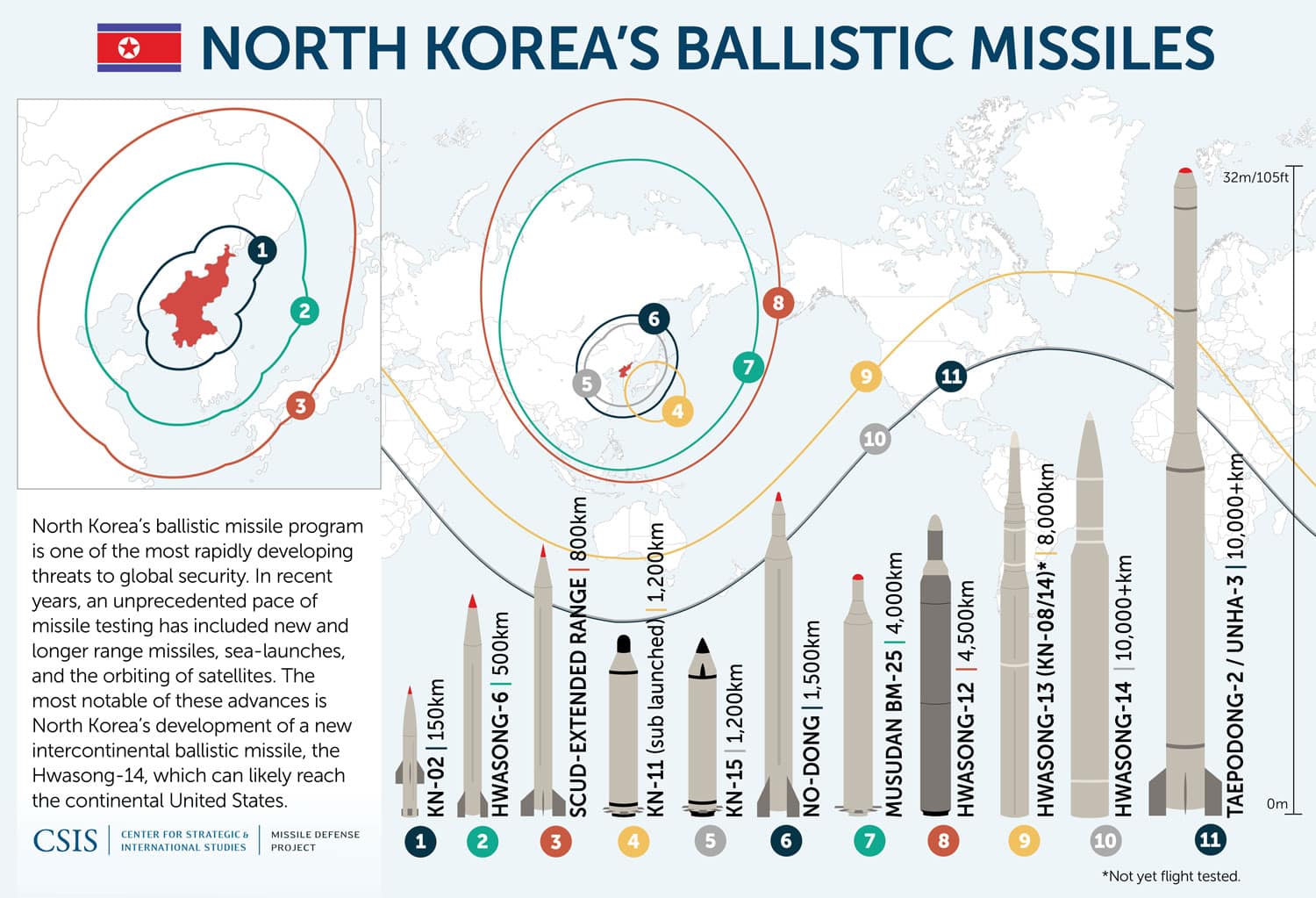
South Korean think tanks hold a very strong presence when compared to China, Japan, and India, behemoth countries with incomparably large economies. The #1 and #3 best think tanks in the region are South Korean, as mentioned above. Four of the top fifteen, and seven of the top fifty on that list sit just below the 38th parallel. If the beltway ever needed a selfish reason to care about the DPRK missile threat, it could find one in the impressive brain-trust that thrives under the sword of Damocles called Hwasong-6.

**Spoiler Alert** The best think tank in the world in 2017 is select area to the right -->  Chatham House in the UK.

3D Printers: the Newest Weapon?

After Rick’s recent presentation where he discussed the future of weapons, I became curious about 3D printers and the possibility of creating weapons more easily with them. Will this make it easier to obtain guns without records and licenses? Will it become easier for foreign countries to build weapons of mass destruction? Knowing little about 3D printers, I have watched YouTube videos to see what can be created. If foreign enemies obtain this technology, will modern warfare be changed? Will the proliferation of weapons lead to more terrorist attacks, lone wolf attacks, and the escalation of wars? According to a 2014 “Wired” article, a man in Japan obtained a 3D printer and printed several firearms for himself. According to the article, there are no laws in place to prohibit the use of 3D printers to create weapons.  The Liberator plastic gun was manufactured by Cody Wilson and has become the most well-known and often printed gun in the world of the 3D printer. According to New Atlas, Solid Concepts recently created a semi-automatic 1911 pistol. New Atlas also describes the ability of the military to use 3D printers to create necessary parts for their own weapons. Without having foreign manufacturers involved, 3D printers will make the creation of military weapons much more efficient. 3D printing is highlighted as very important in the production of military uniforms, specifically boots. While there are other focuses of the article by New Atlas, they are generally positive and unrelated to national security. Ultimately, I am concerned and curious about the future of 3D printers. Will they become controlled in some way? Will we see a rise in the use of plastic guns? Will the use of 3D printers reduce the costs necessary to supply our military? Lastly, how likely is it that the 3D printer phenomenon will actually take off?


Saturday, November 25, 2017

Nuclear Posture Review


Seven days after his inauguration, President Donald Trump issued an executive order for a revised Nuclear Posture Review (NPR) to be produced. It is underway. It will analyze how nuclear (a) policy and (b) capability should change considering global developments since the last NPR was issued in 2010. The project will be led by the deputy secretary of defense and the vice chairman of the Joint Chiefs of Staff and should be completed before January of 2018.

It will begin by looking at new threats from Russia, Iran, North Korea, and China, and how old threats have changed since 2010.
What to expect:
1)     More accusations of Russia’s violation of the Intermediate-range Nuclear Forces Treaty

2)     A more comprehensive plan to modernize low-yield tactical nuclear weapons – This is a big reversal from Obama-era nuclear posture
·        Critics of low-yield nukes contend that a modernization program could spark an arms race, and that tactical nuclear weapons could be tempting to use, blurring the lines between conventional and nuclear war. Additionally, modernization is expensive. Thirdly, mini-nukes don’t provide any new military utility- anything they can do conventional explosives can do (and without breaking global norms).
·        Supporters of the modernization program point out that China and Russia have recently begun their own modernization programs. They also note that having a variety of yields and weapons (conventional, nuclear) provide the president a more comprehensive list of option in a wartime scenario. It also demonstrates a leader’s willingness to use the nuclear weapons if cornered, thereby enhancing deterrence.
·        **It should be pointed out we currently have a variety of low-yield nukes, and had a lot more during the Cold War

3)     Long Range Standoff weapon (LRSO), the new air-launched nuclear cruise missile
·        Critics say this is pretty pointless

4)     Modernization of triad with bombers (B-21, F-35) and subs (Columbia-class to replace Ohio)
·        I think the triad should be modernized. I’m okay with this one.

5)     Missile defense – this was ordered in a parallel Ballistic Missile Defense Review (BMDR) product.  
·        As shown by the recently approved budget, the missile defense program is being expanded to counter the threat posed by DPRK. This includes research on boost-phase interceptors, which are very impractical as you must maintain physical proximity to the adversary, and have extremely accurate intelligence about launch plans. Drones equipped with laser technology to strike missiles down during boost phase would take decades (and significant investment) to perfect.
·        Critics say that missile defense undermines deterrence, can spur an arms race, and are not accurate enough to comfortably rely upon.

Wednesday, November 22, 2017

One Slip, Two Slip, Red Slip, Blue Slip: Bipartisanship is Dead

The “single most important legacy” of the Trump administration “has consequences 40 years out.” It seems there is little one can do to stop the judiciary picks that are coming from a deeply conservative base that, for most Democrats, is an alarming rate. Only a little-known process has helped the Democrats slow the nominations of lifetime judges to district and circuits courts. The blue-slip process had been used historically by both Republicans and Democrats since 1917. The process gives senators the ability to exercise a quasi-veto power over judicial picks in their home state. The senator returns a blue slip noting support when he or she consents to the nominee; since 1981, no circuit court judge has been confirmed without two blue slips from the home-state senators. However blue-slip process may not survive past its 100-year mark.
More unnerving than seeing Trump alone is seeing Mitch McConnell standing in solidarity with the president. Republican Congressmen seem eager to find some type of consensus with the president and have become Janus-faced in doing so. The pace of seats being filled is not fast enough for advocacy groups like the Judicial Crisis Group, and so McConnell has suggested that it is time to do away with the blue-slip process for circuit court nominees. During Obama’s presidency, Republicans encouraged the use of this process and took advantage of it to block many judicial nominations. The process has been honored on both sides by not advancing judges who were not given two blue slips. Both McConnell and Senate Judiciary Committee chairman, Chuck Grassley have used blue-slips to block Democratic nominees. Just this week Grassley decided to go ahead with two circuit court nominees who have not received support from both of their home-state senators.
The Trump campaign thrived under the message of bucking the system and doing away with long-standing political traditions that impede “progress.” The blue-slip process is not legally binding so we can be now be sure that it will not be honored. Trump has openly mocked and complained about judges who did not support him or his policies and now he seems to have a greenlight from Republicans to stack the courts, even when the nominees are deemed unqualified. For those who think we must “wait it out” and everything will change in four years, the nominees getting confirmed today are here for life. With these confirmations come full backing of Trump agenda. Should we not be concerned that when he stacks the Supreme Court, he secures an expansion on executive power? The unqualified crony judges getting in on Trump’s watch know they need to do his bidding and be thankful, and those of us who are concerned with consequences 40 years out must quit biding our time.