Monday, December 07, 2015

Playing with a Dangerous Tool: State Militaries in the Hands of African Dictators

Playing with a Dangerous Tool: State Militaries in the Hands of African Dictators

            A recent BBC article reported that the government of Burkina Faso charged General Gilbert Diendere with complicity in the 1987 murder of former President Thomas Sankara.  Diendere himself recently led an ill-fated coup against the present regime in September, yet did not face punishment once the coup ended.  Interestingly enough, Sankara himself assumed control “in an internal power struggle,” otherwise known as a coup.  The present government’s charges are likely a simple political ploy to actually punish Diendere for his recent coup.  Nevertheless, the case of Burkina Faso illustrates broader Sub-Saharan African trends of the consistent breakdown of civil-military relations resulting in coup traps across the continent as military elites continually overthrow the government to seize control of the state. 
File:Pick-up surmontés de systèmes de lance-missiles.JPG
Mobile Pick-up Lance Missile Systems; Burkina Faso Army (Wikimedia Commons)
In their book, American Civil-Military Relations, Nielsen and Snider argue that the US (and likely most western countries in general) ought to have politically neutral armed forces that follow objective, rather than subjective control.  This means that the military forces focus on their role of defending the state and achieving its national security interests through violence if necessary, rather than conforming to the societal norms of the populace or politicians it protects.  This ethos failed to develop across Sub-Saharan Africa, as most countries experienced multiple coups over the past half century.  In short, the militaries of these states became a fickle tool in the hands of political elites, one often as dangerous to its wielder as to those within society.  Rather than prepare for objective control against inter-state conflicts, regimes instead co-opted militaries to repress the state’s own citizens and keep the current regime in power.  However, this role made the armed forces just as likely to overthrow the regime when they disagreed with the present policies.
The result has been horrendous civil-military relations within post-colonial sub-Saharan African states.  Rather than a collaborative partnership, the two groups vie for control of the state, with political and economic development often the casualty.  Creating competing military/security structures only worsens the relationship, as additional actors generate greater animosities with no incentive to participate towards constructive partnerships.  Indeed, in many cases the security services merely present yet another challenger for capturing the state.  If African nations ever hope to break out of this coup trap, better civil-military relations are a necessity.  Moving forward, the civil government must reassert control over this hazardous tool, yet in order to do so it must first change the normative discourse of this organizations role in the state.  Only then can it address the professionalization, political neutrality, and freedom from ethnic loyalties that will create a responsible military willing to collaborate in constructive civil-military relations.

Stay the Course: Keeping US Troops out of the Fight against ISIS

Stay the Course: Keeping US Troops out of the Fight against ISIS
            President Obama recently gave an Oval office address to the nation in the aftermath of the tragic shooting by possible terrorists Tashfeen Malik and Syed Rizwan Farook in San Bernardino California.  His main message: Stay the course.  As some elements of the public cry for a deployment of US troops to eliminate the Islamic State, President Obama remained firm behind his present policy of eroding ISIS without the need of US military personnel on the ground.  This undoubtedly comes as a surprise to many in a grieving nation eager to bring the Islamic State to justice for its crimes, especially as it shares its grief with victims in the Middle East and in Paris.  Nevertheless, this is the correct policy to pursue.  In a nation shocked by such horrific attacks over the past year, it is the President’s role to temper the nation’s thirst for retribution and remind it that current measures are working.  He must also stress that the US will hold the guilty parties responsible, albeit through the existing methods that do not risk stepping into another quagmire in the Middle East. 
            The reason is two-fold.  Public opinion itself is often volatile.  After a horrific event such as this shooting, a swing in public preference is only natural and to be expected.  Over the past year alone, a Pew Research Center poll shows support for deploying troops increased from 39 to 47% from October 2014 to February 2015, and it has likely increased again following these attacks in Paris and San Bernardino.  However, the United States cannot afford another strategic blunder such its intervention in Iraq.  Interventions are costly in time, blood, and treasure, the first two of which the American people will quickly lose the stomach to sacrifice as the intervention continues. 
More importantly, the existing measures are working, with ISIS having lost 15-25% of its territory as of November.  Moreover, US airstrikes alongside its host of allies account for the destruction of hundreds of ISIS oil tankers.  These are the funds necessary for ISIS to survive and fund its operations, without which it will surely wither in the desert sun.  The shocking attacks in Paris and California only re-emphasize the current US policy’s effectiveness, as a desperate ISIS must now rely on leaderless resistance attacks to target a western world it can no longer oppose militarily.  Rather than a sign of strength, these efforts suggest a last-gasp effort from an organization that sees its foreign recruits dwindling, its revenues and territory disappearing, and the methodical extermination of its operatives via airstrikes.  The US president is thus correct to maintain the present course.  Rather than sending the order for the troops to load the ships, a far better plan is to scramble the bomber sorties for another day of hunting ISIS.


Why Burundi Is NOT Another Rwanda

Why Burundi is NOT Another Rwanda

To explain this theory, background information is needed. The Hutu and the Tutsi are differentethnicities within Africa. Perhaps during colonization their physical differences were noticeable but today they are not. These people were separated by class differences, the Hutu farmed agriculture and the Tutsi raised livestock. Movement in these classes was fluid and happened often. The Hutu and the Tutsi speak the same language and mostly the same Christian faith. When colonization happened, the Germans and Belgians came into the region near Rwanda and decided that the Tutsi, being taller and having sharper features like the Europeans, would be the elite class. The shorter, wider nosed Hutu would be the lower class. Movement in the social ladder was stopped and identification cards were mandatory, permanently displaying HUTU or TUTSI status. After the colonizers left, the Tutsi and the Hutu had many violent clashes due to the hate that was developed during this colonization period. 

Rwanda. 1994. Was an awful time for African and namely Rwanda. The economic problems Rwanda experienced was blamed on Tutsi control. The catalyst for the violence was the alleged shooting down of a Hutu airplane carrying government members including the President. The Hutu wanted to kill off the entire Tutsi population. The Tutsi retaliated. In fact, the Hutus even killed other Hutus that didn’t agree with the mass murder. This was (in simple form) the genocide of 1994. The President of Rwanda instilled a hate and a fear between the two ethnicities and Human Rights Watch explains the situation as, “…(the) elite promoted hatred and fear to keep itself in power.” The genocide only ended when the Tutsi’s effectively defeated the Hutus. The division is still apparent today, though not as it was a decade ago.

Burundi is not Rwanda. Burundi, the neighbor of Rwanda, has seemingly lain to rest the ethnicity differences between their Hutu and Tutsi peoples. The violence we are current watching from across the Atlantic is different. Yes, Burundi has a long history of violence between the two ethnicities, but in today’s context, the issue stems from an illegal and flawed election. The current President Pierre Nkurunziza has ran for President for a third term. This is illegal according to the Constitution of Burundi. The violence in Burundi stems from this issue, not from ethnic divisions. The population identifies themselves as Burundian, not Hutu or Tutsi. The economic issues are blamed on a corrupt government, not the ethnicity of the President.  The protests began after the election, not after a violent attack on a tribe/ethnic minority or majority.

The importance in NOT grouping together the two countries in a “Hutu v. Tutsi” paradigm lies with the way the violence will be mitigated. In an ethnic clash, stopping the killing of minorities or majorities and the retaliatory attacks that perpetuate between the parties is very difficult. A third party that chooses sides will only deepen the conflict as the Belgians and Germans did in Rwanda. The mistakes made are clearly visible in Rwanda. Burundi does not have this problem. Stopping the violence in Burundi centers around stopping an illegitimate government power from continuing his reign over the citizens of the country. The protests will end. A fair election can take place. A rightful President can be voted into office. This conflict is invariably different than Rwanda. A population uprising against an illegitimate government is NOT genocide between ethnicities. Making this mistake will only make mediating the situation worse. The only part of Rwanda that is similar to Burundi is the fact that no other country has decided that Burundi is important enough to assist. In Rwanda it was genocide, in Burundi it’s the breaking of a social contract between President and populace, but in both cases, the countries are left to fend for themselves.


Sunday, December 06, 2015

Climate Change and National Security

Earlier this year, President Obama told grads at the US Coast Guard Academy that "climate change constitutes a serious threat to global security," which will "impact the way our military defends our country."  Long before the President was first elected in 2008, climate change was on the military's mind.  In a 2003 report, the defense department warns that food shortages, a decrease of fresh water, and a disruption to energy supplies were unlikely, but plausible enough to warrant adjustment from the national security apparatus.  At the time, the recommendations were to adapt and engineer our way out of it.

A decade later, climate change is potentially creating more problems.  First, with the heating of the globe and the melting of ice caps at the poles, the ocean levels could are rising.  Some of the largest population centers are at risk of being swallowed by the ocean.  If this were to become a present danger, the military would have to be prepared to develop a plan to rescue millions of people.  In addition, the navy would effectively have more ocean to patrol.  But even before the ice caps have melted, climate change is effecting populations around the globe today.  There are reports that try to link climate change with the Arab Spring.  Russia is expanding oil drilling into the arctic due to the break up of ice caps that have prevented this in the past.  President Obama has responded by requesting more coast guard ice breakers to protect U.S. interests in the region.


As the world discusses climate change at COP 21 in Paris, the U.S. military is preparing for the risks associated with climate change but also has the potential of being a part of the solution of averting the crisis.  The military is a large developer of green technologies that could mitigate the effects of climate change.  All that is needed is the political will to scale up and continue to develop these technologies.

RMB in SDR: Implications for US Security

Agence France-Presse: Getty Images

On November 30, the International Monetary Fund (IMF) announced that the Chinese renminbi (currency code RMB) would be added as a special drawing rights (SDR) currency. Designation as an SDR makes the renminbi a reserve currency, a symbol of China's economic power.

Although this designation was predicted to occur, it was a major undertaking on China's behalf. They liberalized interest rates, developed the domestic bond market, and set the US dollar to RMB exchange rate to the previous day's close: all ways of lifting government regulations on the currency.

Previously, the US dollar, euro, Japanese yen, and British pound sterling made up the SDR basket. On October 1, 2016, the SDR market basket will consist of the following percentages:

  • US dollar: 41.73%
  • Euro: 30.93%
  • Chinese renminbi: 10.92%
  • Japanese yen: 8.33%
  • Pound sterling: 8.09%

While the percentage for the US dollar remained around the same, the introduction of the Chinese renminbi led to a decrease in percentage for the euro, Japanese yen, and British pound sterling. Since the value of the renminbi is loosely tied to the US dollar, some argue that this designation will increase US influence of financial institutions. Due to a surging dollar, China has had to spend billions in order to maintain the value of its currency. In fact, China's spent $100 billion in August alone to prop up the renminbi. This signals trouble for China as the renminbi is used more extensively around the world.

But what are the implications for the US? The rise of a major economic competitor's currency in the world financial markets means that sanctions that the US wishes to impose on other countries, including for security reasons, will have less power than they currently hold. This could have adverse effects in sanctions that pressure other countries to do what the US wants- there is now more of a Chinese alternative to offer them.

Overall, the renminbi's designation as a reserve currency will not change global financial markets overnight. However, the structural reforms necessary for China to effectively provide a reserve currency will have lasting effects on their domestic economy. Stagnating growth in China may become worse. The renminbi might also depreciate, and the Chinese government will need to accept this after a gain in a public symbol as an economic power.

Saturday, December 05, 2015

San Bernardino and Gun Control Policy

The FBI is now investigating the San Bernardino massacre “as an act of terrorism”.  The attacks on Wednesday claimed fourteen lives and wounded twenty-one.  FBI director James Comey said perpetrators Syed Rizwan Farook and Tashfeen Malik appear to have been radicalized.  Authorities have found more than 4,500 rounds of ammunition, twelve pipe bomb-type devices, and other tools capable of making bombs with in the couple’s home.  Farook and Malik were carrying more than 1,400 rounds of .223 caliber ammunition and more than 200 9mm rounds while fleeing the scene.  This has reignited the gun control debate, which is permeating national security concerns since the attacks are being considered an act of terrorism.

Senator Chris Murphy (D-CT) tweeted “Your ‘thoughts’ should be about steps to take to stop this carnage. Your ‘prayers’ should be for forgiveness if you do nothing – again.”  This is a popular sentiment in public opinion on the gun control debate.  As of October 2015, 55-percent of Americans believe currentlaws on gun sales should be stricter.  Shootings in recent history – such as Sandy Hook – have caused slight upticks in public opinion favoring stricter gun sales laws.  However, the general trend of public opinion has stayed consistent in the last fifteen years as people have clear-cut views on the topic.

Laws Covering the Sale of Firearms -- Americans' Preferences Since 2000

On the other hand, only 27-percent of people believe that handguns should be limited to police possession.  This has changed drastically since 1959, when 60-percent thought handguns shouldn’t be legal for ordinary citizens to carry. 

Support for Ban on Possession of Handguns, 1959-2015

These statistics show that American citizens generally believe that protecting the second amendment is important but some form of stricter gun sales law should be implemented.  The attacks in San Bernardino have already stimulated the controversial gun control debate. President Obama was quick to politicize the attacks in favor of increased gun control, which met backlash from the other side of the aisle, as expected.  It is clear a line is being toed in regards to gun control.  People want the ability to protect themselves but also want to limit the threat of excess guns in society.  Gun control is an increasing national security concern due to potential for terrorist activity on American soil.


Bomb the SH#T out of ISIS - Count me in says GB


                The Paris attacks have drawn attention to the growing threat of ISIS and the ability for ISIS threats to manifest themselves within the Western world. This growing resentment towards ISIS has caused many nations to begin campaigns fighting ISIS in Syria and Iraq. President Obama claims that currently 40 nations are contributing to the effort of “degrading and ultimately destroying” ISIS. Despite this staggering number of nations already fighting ISIS, Great Britain would like to join the coalition of bombing ISIS. On December 2, the British Parliament voted to join the aerial campaign. 

RAF plane

          Despite the coalitions excitement for another member, is Great Britain's presence really necessary? Public opinion in Great Britain is split 50/50 on the subject. While the public is divided, parliament voted 397 to 223 in approval of airstrikes in Syria.

          Proponents of the airstrikes cite that Britain is already bombing in Iraq and that the exclusion of Syria makes no sense. France and the United States are currently bombing and as a NATO ally, Great Britain feels it is necessary to join. Additionally, France has appealed directly to GB for help in the aerial campaign. Exclusion from this campaign both snubs the US, France and GB's responsibility to NATO allies.

          Those who have opposed Great Britain's entrance into the Syria bombing say that the skies above Syria are already crowded enough. Currently Russian, U.S., and French planes occupy the skies and the addition of GB adds little to no tactical advantage. It is also believed that more bombing in Syria causes more refugees to flee the country, further aggravating Europe's migrant crisis. The lack of public support for this entrance is also quite troubling. Engaging in another war without the public's approval is a major risk with political constituencies of those in office.

          Great Britain's decision may prove to be problematic in the future. The decision to engage ISIS provides a marginal tactical gain yet places Great Britain firmly in ISIS's sights. If ISIS can reach France, it is not without reason to say Great Britain may be next. A decision to engage ISIS should be met with an equally ambitious plan to bolster security across the nation. While it is encouraging to see Great Britain's allegiance honored, the decision to engage ISIS may make more problems than originally anticipated.

Social Media Stronghold in Public Opinion

Public opinion's influence on national security policy is typically action-item based. Public outcry tends to be most unified and moving after a major crisis or event. The shock and awe factor of such events triggers a reactionary call to "do something". The executive office must utilize public opinion for support no matter how ill-informed, emotional, or misrepresented the public opinion may be. It is paramount that the public is a partial actor in government decisions. 

While the mass media plays a large role in public thought and opinion, social media is an important, if not more important role. Social media has consumed the American public. A growing percentage of users receive their primary sources of news from trending posts, or reposts from friends

 Question: Did you find news in any of the following ways in the last week, or did you not find news in that way?
This means that users may only see articles that fit their personal viewpoints, as interfaces such as Facebook utilize algorithms to show relevant content to the user. When using Twitter, trending topics can surge interest and instantly go viral by the proper number of retweets. This is significant for how the public forms its opinions on topics related to national security, and which events make 'headlines'. Headlines are being largely redefined as successful trending topics.

A mounting example, and current crisis, in the United States is the influx of refugee asylum seekers planned for 2016. The events over the summer of 2015 set the stage for US intervention and support in the Syrian civil war.  A three-year old boy washed up on the shore of Turkey in September. This prompted a flood of social media response and public outrage at the graphic evidence of a dead child, which in turn forced the Syrian refugee crisis and the civil war into the American headlines. 

The public's outcry spurred the reaction from the White House to propose an additional 10,000 refugees acceptance for 2016. This decision was quite controversial, with the left in general support and the right in general dissent. 


This creation of a partisan public issue will be a major topic of interest in the 2016 presidential election, and will continue to be a challenge for the remainder of President Obama's term. While public opinion has historically been less than positive towards refugees (with the exception of the 1990's "global activism"), it may be time for the US to revise its policies and for US public opinion to become more informed and accepting of refugees. 


The executive office should seek policies that inform and guide public opinion on foreign policy issues that directly involve US citizens. This can only happen as a proactive effort, not a reactionary one. The executive office and its media correspondents should seek to utilize social media campaigns to increase education, transparency, and creatively work with partners to 'trend' topics for the public. 


Tuesday, December 01, 2015

Losing the War Against Financing of Terrorism: Al Shabab and the KDF

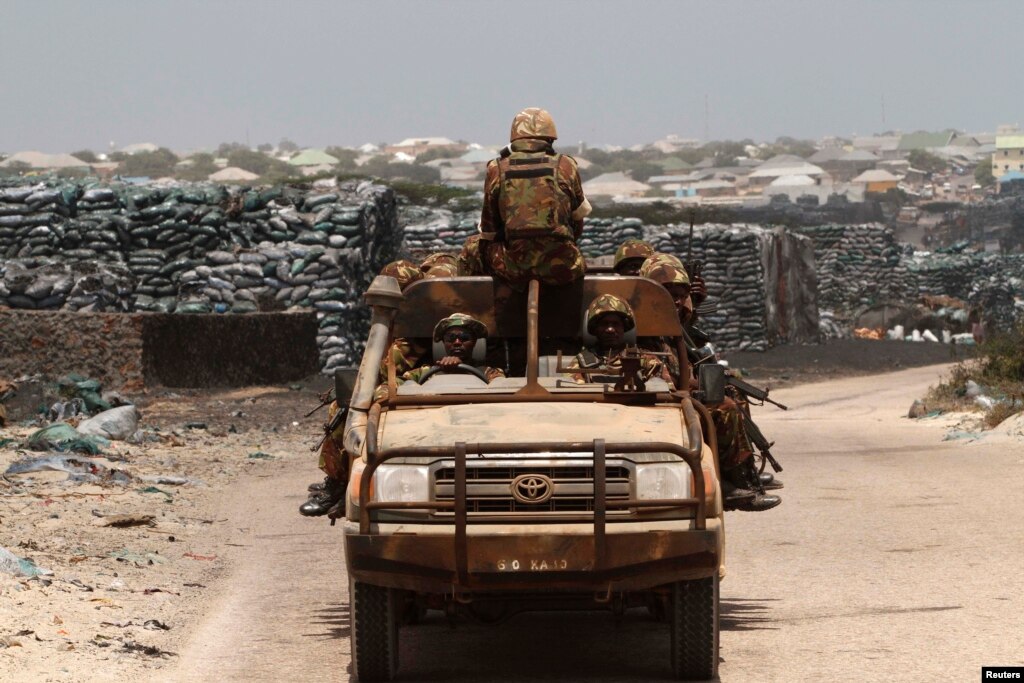
A large part of the war on terrorism is disrupting financial supports for terrorist organizations.  The United Nations made an effort to limit Al-Shabab finances by banning the imports of charcoal, which accounts for $25 million a year in funding.  The Kenyan Defense Forces, who took over the major port in Southern Somalia, has been profiting from this banned export, undermining the UN sanctions regime.  The most disconcerting part of this fact is that Al-Shabab is responsible for two high profile attacks in the past few years at West Gate Mall, in Nairobi, and at Garrissa University, and KDF is effectively supporting the financing of that terrorist group.

For the world, KDF, now the largest military in AMISOM, is considered indispensable in one of the world's terrorist hot spots.  The US, for its part, gives $100 million dollars in the way of logistics assistance and military hardware.  The US is also interested in working with the Kenyan navy at a base near Mombasa.

So what can the US or the UN in do about KDF?  Effectively, nothing is the answer.  If they withdrawal support, Kenya will just withdrawal its forces and claim the west is against them.  Naming and shaming has been effective on the world stage, but leaders in Kenya, who would have the ability to reprimand the KDF, are either tacitly complicit or are denying the ostensible facts.  Corruption is endemic in Kenya and this is merely another example in the corruption that is witnessed in Kenya on a daily basis.

The only cogent response the US and her allies can take is supporting civil society in Kenya.  If politicians are denying the facts surrounding the KDF reinforcing Al Shabab financially, then civil society should expose their position and advocate for a political change.  But, effectively, there is nothing the U.S. can directly do outside of diplomacy:  this is up to the Kenyan people.

The Pivot to Space

President Obama signed the US Commercial Space Launch Competitiveness Act.  This act allows for the mining of asteroids by US commercial interests. It reads, 

"A United States citizen engaged in commercial recovery of an asteroid resource or a space resource under this chapter shall be entitled to any asteroid resource or space resource obtained, including to possess, own, transport, use, and sell the asteroid resource or space resource obtained in accordance with applicable law, including the international obligations of the United States." 

Basically, if you go to space, take a chunk out of a rock, and bring it home, it is yours. But only if you are an American. Obviously, there are those who believe this may contradict international law. Primarily, international law is governed by UN treaties. The US has signed 1967 Outer Space Treaty. However, this treaty is more intended to promote peaceful and cooperative relations in outer space. It prevents the use of nuclear weapons in space, and does not allow a nation to claim sovereignty over any bodies. America may be able to mine the moon, but it will never own it, regardless of where we plant the flag. 

Yet, the new act makes it clear, US commercial interests will not be making any ownership claims. While the Moon Agreement goes into more detail about exploiting space resources, the US and several nations have not ratified it. To be clear, the US is really the closest nation capable of exploiting space resources, but when other nations reach the capabilities needed to mine asteroids, it will be imperative for an international agreement. By being the first to act, the US places itself in a position to greatly influence future agreements. 


The law also provides a greater incentive for US commercial interests to pursue mining opportunities in space. By guaranteeing any rights to resources, it clears up any ambiguities or questions, commercial interests may have had prior. The law will gauge international reactions and provide an engaging topic in the upcoming April meeting by the UN Office for Outer Space Affairs legal subcommittee. Until then, companies already established in the field can rejoice in this first step. What could be a trillion dollar industry, getting ahead of the game both in technical capabilities and legal concerns can be a strong advantage for US interests. 


Sunday, November 29, 2015

Russia's Menu for the holidays: Turkey

Following the Turkish shooting down of a Russian fighter bomber that supposedly violated Turkish airspace, the current situation in Syria and Iraq has taken a drastic turn. The increasingly heated rhetoric between nations involved in the Syrian conflict highlights the dangers that the United States will experience in the future and it seems the only group to benefit is the Islamic State.
 Russia stated today that it plans on deploying its highly advanced S-400 to Syria in order to protect its military assets in the region. The S-400 is an extremely capable system that has a range of 400 kilometers, effectively controlling portions of Turkish air space as well.

The major issue in the growing conflict between Turkey and Russia is whether Syrian dictator Bashar al-Assad will be able to stay in power. Russia fears the loss of yet another ally in the region and the access to the only warm water port it can use, while an increasingly confident Turkey is seeking to shape the outcome of its neighbors.
Russia has not only deployed the S-400 in the region, but has other cards at its disposal in order enact revenge on Ankara. One of the major methods that will be implemented in retribution over the downing will be the energy sector. Russia can easily turn off the valves for Turkey, as Turkey is heavily reliant on Russian oil. Mutual development in the energy sector has already been targeted by Moscow, with plans for a nuclear power plant and the development of an oil pipelines between the two countries being listed as possible points for revenge.

                Lastly, the vital tourism sector in Turkey will come into scope if de-escalation or de-conflicting fails. The Russian government has already warned its citizens about the supposed dangers of a trip to Turkey, and many Russian travel agencies have stopped offering vacations to Turkey. As the largest number following German tourists comes from Russia, this will be drastic on the Turkish economy.

Enough UMPH for a new AUMF?


Republican members of both the house and senate have been increasingly critical of President Obama’s strategy or lack thereof with regards to dealing with ISIL. As of late, the president has outlined the main strategy will be that of containment and control, in hopes that ISIL will die from within. Despite Obama’s strong aversion to ground forces, the US is still playing a strong role in the region. Currently U.S. forces are fighting on the authority of the September 14, 2001 AUMF passed three days after 9/11. Recent cries from Republicans have shown displeasure with the administration for using this AUMF for conflict outside of Afghanistan and Iraq.

                Yet again, the Republicans inability to even agree amongst themselves has shown how shattered the party is from within. Hawks amongst the Republicans think that any new AUMF should be a blanket approval for any action needed against any enemy. Hawks such as Marco Rubio have stated that the new AUMF should read “’We authorize the president to defeat and destroy ISIL’. Period.” However, the doves within the party argue that the new AUMF would still be too broad. It is within these shattered party lines that we have seen the president play an ingenious political strategy.

                The Obama administration, hearing these cries for a new AUMF, asked Congress for support with a war resolution that expired after three years. Yet the divide within the Republicans, both in the house and the senate, led to considerable inaction. Hawks claimed that Obama’s proposed AUMF lacked enough strength and were not in support. Doves within claimed the new AUMF was entirely too broad. Obama’s ability to draft an AUMF that split the party of opposition upon itself allows the Obama administration to both say they asked for a new AUMF and show that Republicans were the ones who stopped a new AUMF.


                Unfortunately, it’s election season and with election season comes an excessive amount of generalities from candidates. The process needed to craft an appropriate AUMF to deal with ISIL causes candidates to specify their stance. Specific language of the AUMF causes us to ask hard questions. This is the reason why our government has become so ineffective. This is the reason why our government has become so unpopular. Our government, within both parties, lacks the intestinal fortitude to ask hard questions which is precisely what we need for a new AUMF. Asking the hard questions is what our Constitution intended. Until our leaders find their UMPH, don’t hold your breath for a new AUMF.

Saturday, November 28, 2015

Muddied Waters Spread Past Syria

What's going on outside of Syria?

Many issues have been created from the intake of large quantities of refugees in Europe. An underlying issue that penetrates public thought is the fear that ISIS has or could infiltrate the refugee population. These fears and threats have spread to all major powers including the US, France, the UK, Russia, and Germany. Even Pope Francis has warned of this issue. This fear is only amplified by the recent attacks on Paris, even though the perpetrators were from Belgium. France has vowed to respond with force both in relentlessly searching for parties responsible in Europe and stepping up operations in Syria. France is seeking assistance for this effort, but the viable options for assistance seem to be coming up short.

So who is doing what?

The United States has largely skirted on the edges of developing a real plan for assisting the French, save that of promising to help in whatever capacity needed. The US has encouraged the French to not invoke Article V of NATO, due to the fact that a full on engagement from NATO would likely not solve the underlying issues in Syria. President Obama is in the final months of his presidency, and is resisting to put boots on the ground for as long as he possibly can. This strategy has come under extreme criticism from Republicans, as well as Democrats who believe Obama is downplaying the attacks on Paris as a "setback".
UK Prime Minster David Cameron has taken a much more empathetic and proactive approach towards assistance to France. The UK faces the same threats as the rest of Europe with concerns to refugee populations, homegrown radical Islam, and ISIS cells. It is economically and intrinsically tied to France as well as the rest of Europe. PM Cameron has laid out a plan for amping up additional airstrikes in Syria and has resolved to put an end to ISIS operations.  However, PM Cameron is also leery of sending back ground troops to the Middle East. His plans include utilizing British airbases on Cyprus to launch offensive airstrikes and to eventually deploy RAF forces.
Russian involvement has been more aggressive, but the current tensions between Turkey and Russia may prove to be chaotic and troublesome for future efforts against ISIS. Turkish forces shot down a Russian warplane, and what was once a concerted effort on issues in Syria may escalate to conflict between regional powers. The Turkish government has called for cooperation, but a Russian response is still to be determined. Russia's motives and operations have been questionable as far as who they are actually fighting. Russia has been accused of primarily helping the Assad regime instead of solely fighting ISIS. This proves to be complicated and troublesome in terms of the French seeking assistance in the region. Compounding this problem is the fact that the US's refusal to cooperate militarily with Russia--an issue that the French cannot afford to provoke.
An obvious regional supporter should be the Germans, however Chancellor Merkel faces domestic scrutiny of refugee and border policy, and Germany has not engaged in an offensive attack since WWII.

So what?

If situation in Syria wasn't complex enough, the addition of the struggle of world powers for operational dominance and restraint will confound any possible solution. The waters have muddied  to the point of opacity at this point, and a combined solution may not be reached for years to come. The best to hope for at this point is deescalation between Turkey and Russia, and a new US president with a strong grip on foreign policy.

Tuesday, November 24, 2015

Tunisian Terror: Déjà Vu?

Bus explosion in Tunis on November 24, 2015. Photo courtesy of Breaking News.
A bomb rocked the city of Tunis today. This is the 3rd major attack this year in the country; the first was the March attack at the Bardo Museum in Tunis, the second was the June attack at the Imperial Marhaba Hotel in Sousse. While other attacks have occurred throughout this year and beforehand, the visibility of these 3 large attacks in the capital and major tourist destinations have made them the most discussed.

The explosion was caused by a bomber on the bus, and targeted the president's security guard. This makes it different than the other major attacks this year, both of which were mainly targeted at tourists. Both of these prior attacks were also claimed by the Islamic State (IS). IS's strategy in Tunisia thus far has been to attack tourists, and therefore the tourism industry, a large portion of the Tunisian economy. This is especially pertinent since Tunisia is seen as a beacon of secularism in the Middle East and North Africa (MENA) region, and therefore is a major target for IS.

The bus attack is more similar to other, smaller attacks in the west of Tunisia. In the Mount Chaambi area, the jihadi group Okba Ibn Nafi Brigade has a basis of operations. The outstanding majority of their attacks are carried out upon the armed forces and police in the area. However, lately the Tunisian government has been targeting them; working to try and eliminate them despite the group's remote hiding places in the mountains. Since they feel threatened due to government action, Okba Ibn Nafi Brigade might be striking back at the capital as revenge.

Tunisia has declared a 30-day state of emergency after this latest attack. A curfew was placed on the capital Tunis until Wednesday morning. Such actions are the typical reaction of the Tunisian government to large attacks. The government and Tunisian society have proven resilient- the effects of the Arab Spring have proven more permanent there: nothing that these attacks can change.